Crochet School · Start here
Crochet for Beginners: A Step-by-Step Guide
Everything you need to start crocheting, in the right order: choosing a hook and yarn, your first stitches, reading a pattern and six first projects.
On this page
- Your learning path
- What you need to get started
- Step 1: Choose your hook and yarn
- Step 2: Hold the hook and yarn
- Step 3: Make a slip knot and chains
- Step 4: Learn the basic stitches
- Step 5: Make your first projects
- Your first projects, in order
- Reading your first pattern
- Common beginner mistakes (and how to fix them)
- What to learn next
- Common questions
- Practice patterns
Crochet is a wonderfully accessible craft. One hook, some yarn and a handful of stitches will take you from a first wobbly chain to blankets, bags and gifts. This guide gives you a clear path: what to learn first, what to leave for later and six first projects that build your skills one at a time.
Your learning path
- 1
Step 1
Choose your hook and yarn
A smooth, light-colored worsted yarn and a 5 mm hook make stitches easy to see.
Yarn weights explained Step 2
Make a slip knot
The adjustable loop that attaches yarn to your hook before the first chain.
Your first stitches, step by stepStep 3
Learn the chain stitch
Chains form the foundation of most projects. Aim for even, relaxed loops.
Chain stitch tutorialStep 4
Learn single crochet
The shortest basic stitch — dense, sturdy and used in countless patterns.
Single crochet tutorial- 5
Step 5
Make your first projects
Work through six small projects in order — each one adds a single new skill.
Beginner patterns
What you need to get started
- A crochet hook. A 5 mm (US H-8) hook is a comfortable size for learning with worsted-weight yarn. Hooks with a flat thumb rest or a cushioned handle can be easier to hold.
- Yarn. Choose a smooth, light-colored worsted-weight (medium #4) yarn. Dark, fuzzy or very slippery yarns hide your stitches while you are learning.
- Scissors and a tapestry needle for cutting yarn and weaving in ends.
- Stitch markers (optional). A scrap of contrasting yarn works just as well.
If yarn labels look like a secret code, the yarn weight chart and hook size chart explain every number.
Step 1: Choose your hook and yarn
Look for the weight symbol on the yarn label — a small skein icon with a number from 0 to 7. For learning, pick a 4 (medium). The label also suggests a hook size; for your first swatches, use the size it recommends.
Acrylic is affordable, forgiving and easy to wash, which makes it a great practice yarn. Cotton shows stitches clearly but has less give, so it can feel a little stiffer at first.
Step 2: Hold the hook and yarn
There is no single correct grip. Most people hold the hook either like a pencil or like a knife. Try both and choose the one that feels relaxed.
Your other hand controls the yarn. Drape the working yarn over your fingers so it can slide through them with a little resistance — that gentle resistance is your tension. Tension that is too tight is the most common beginner struggle, so if your hand aches, loosen up.
Step 3: Make a slip knot and chains
Every project starts by attaching the yarn to your hook with a slip knot, then making a row of chains. The first stitches lesson walks you through both, and the chain stitch tutorial has close-up tips.
Practice chains until they look even — 20 or 30 at a time is plenty. Even chains make the first row of every project much easier.
Step 4: Learn the basic stitches
Learn the stitches in order of height. Each one adds a single new movement to the one before.
| Stitch | US abbreviation | Height | Good for |
|---|---|---|---|
| Single crochet | sc | Short | Amigurumi, bags, borders |
| Half double crochet | hdc | Medium | Hats, scarves, blankets |
| Double crochet | dc | Tall | Granny squares, blankets, mesh |
You will also meet the slip stitch, which joins rounds and moves your hook without adding height.
A good practice routine: make a small square swatch of each stitch — about 15 stitches wide and 15 rows tall — counting your stitches at the end of every row.
Step 5: Make your first projects
Choose something small and flat, where perfect sizing doesn’t matter. The projects below were written as a series: each one uses what you already know and adds exactly one new skill, so you are never learning three things at once.
Your first projects, in order
- Chain Stitch Bracelet — slip knot, chains and your first slip stitches. About 20 minutes.
- Easy Single Crochet Dishcloth — a foundation chain, rows of single crochet, turning and counting.
- Half Double Crochet Ear Warmer — a second stitch, measuring as you go and sewing a simple seam.
- Easy Double Crochet Bookmark — tall stitches and a turning chain that counts as a stitch.
- Easy Round Coaster — working in rounds and increasing to keep a circle flat.
- Simple Striped Mug Cozy — changing colors, carrying yarn and making a button loop.
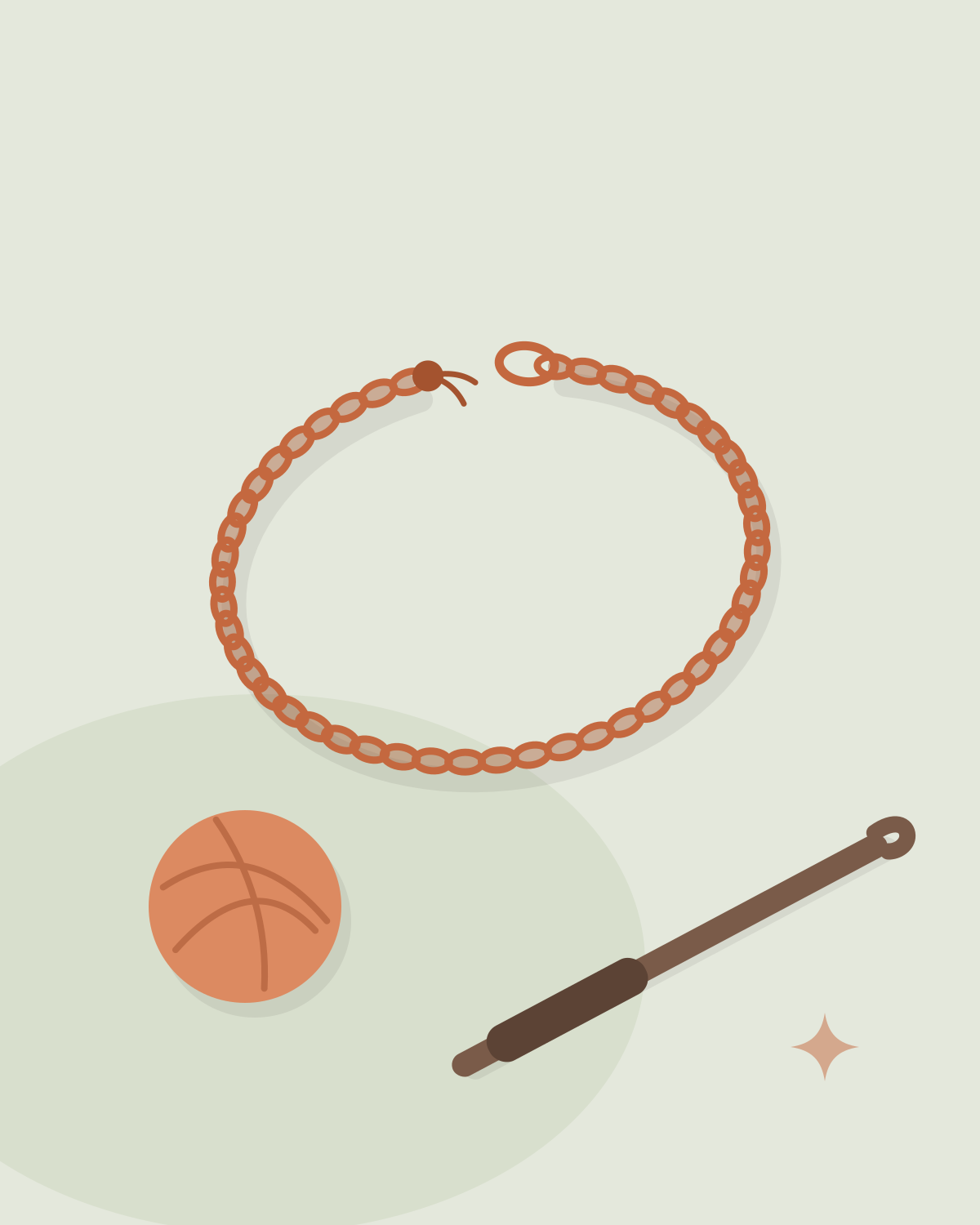 Free patternChain Stitch BraceletAbsolute Beginner20 minutes
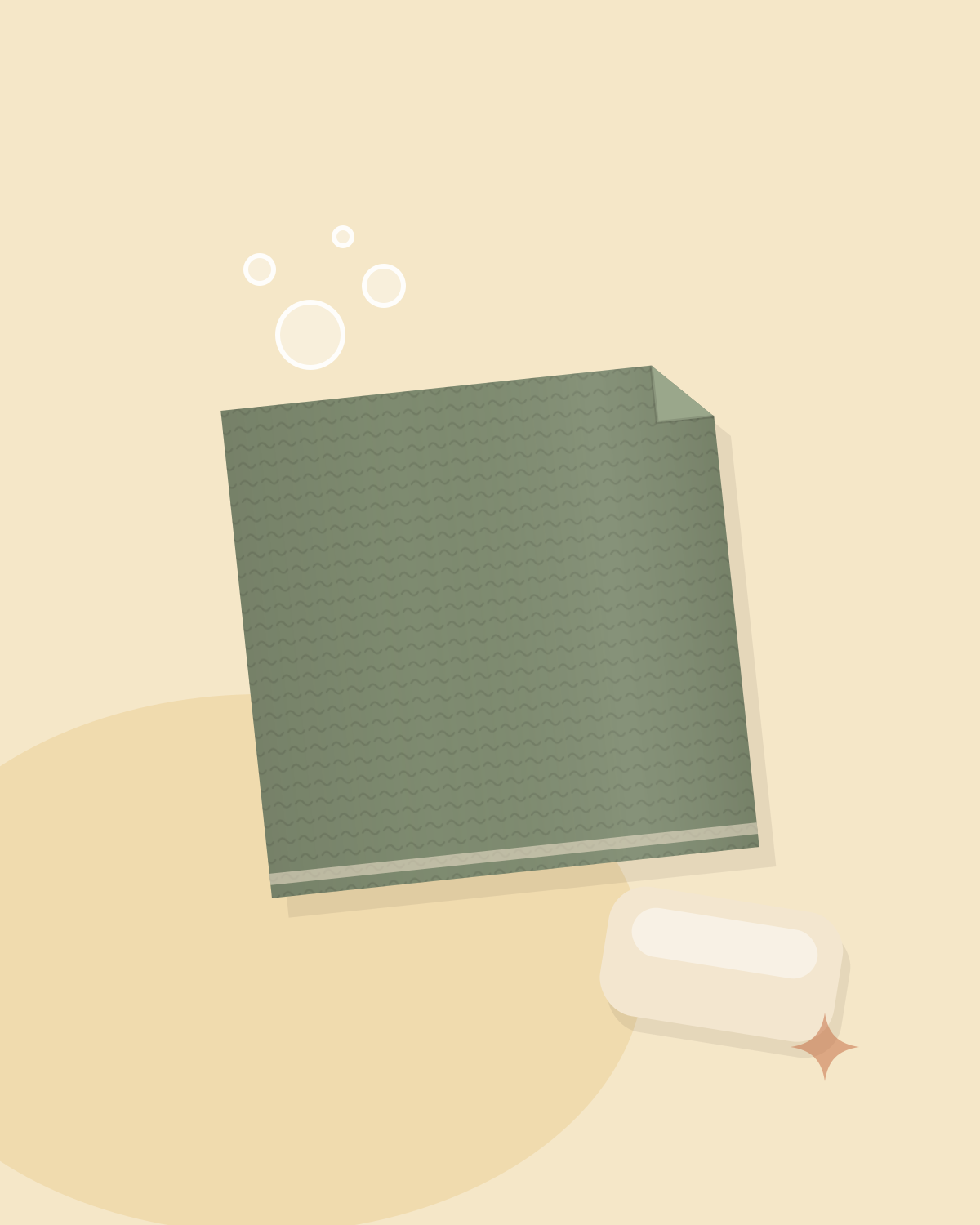 Free patternEasy Single Crochet DishclothAbsolute Beginner2–3 hours
When you have finished the series, a classic scarf or a granny square makes a great next challenge.
Reading your first pattern
Patterns use abbreviations such as sc, ch and sl st, and symbols like brackets and asterisks for repeats. Our guide to reading crochet patterns explains the whole format, and the abbreviations chart is a handy reference to keep open while you work.
Common beginner mistakes (and how to fix them)
Edges that wander in or out. Count your stitches at the end of every row, and place a stitch marker in the first and last stitch so you never miss them.
Tension that’s too tight. Relax your grip on the yarn, pull loops up onto the wider part of the hook, or try a hook one size larger.
Working into the turning chain by accident. Check whether your pattern’s turning chain counts as a stitch — the notes will say.
A tricky first yarn. If you can’t see your stitches, switch to a smooth, light-colored worsted yarn. It makes an enormous difference.
What to learn next
Once rows feel comfortable, learn to fasten off and weave in ends neatly, change colors for stripes, and make a magic ring to start projects in the round. Then explore the stitch library and try the gauge calculator when a pattern needs a specific size.
Common questions
Is crochet hard to learn?
The first hour is usually the trickiest, while your hands learn to hold the hook and the yarn at the same time. After that, progress tends to be quick — the basic stitches are variations of the same few movements.
Is crochet easier than knitting?
Many beginners find crochet easier to start because there is only one active loop on the hook at a time, so dropped stitches are rare. Both crafts are very learnable.
What should my first crochet project be?
Something small and flat, like a chain bracelet, a dishcloth or a coaster. Save amigurumi and garments for when the basic stitches feel comfortable.
Should I learn US or UK crochet terms?
Learn whichever your patterns use. The stitches are the same; only the names differ. This site uses US terms and notes the UK equivalents.
Written by
Editor — placeholder profile
This is a placeholder author profile. Before launch, replace it with the real person who writes, designs and tests the patterns on this site.
Placeholder profile — replace before launch
Put it into practice
Patterns to practice with
- Free pattern
- Free pattern
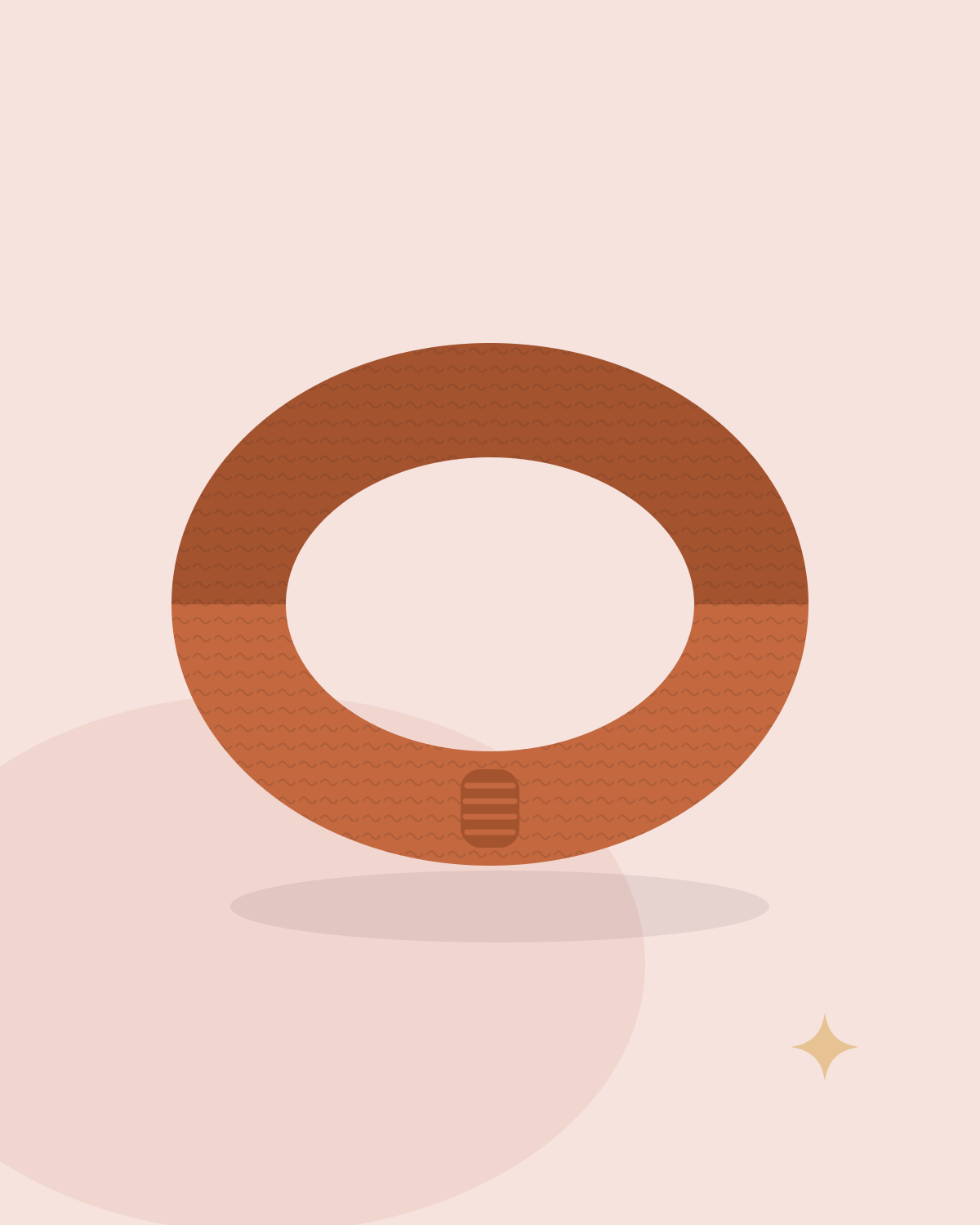 Free pattern
 Free pattern
Newsletter
A little crochet inspiration in your inbox.
New free patterns, gentle tutorials and seasonal ideas — about twice a month.