Easy Single Crochet Dishcloth
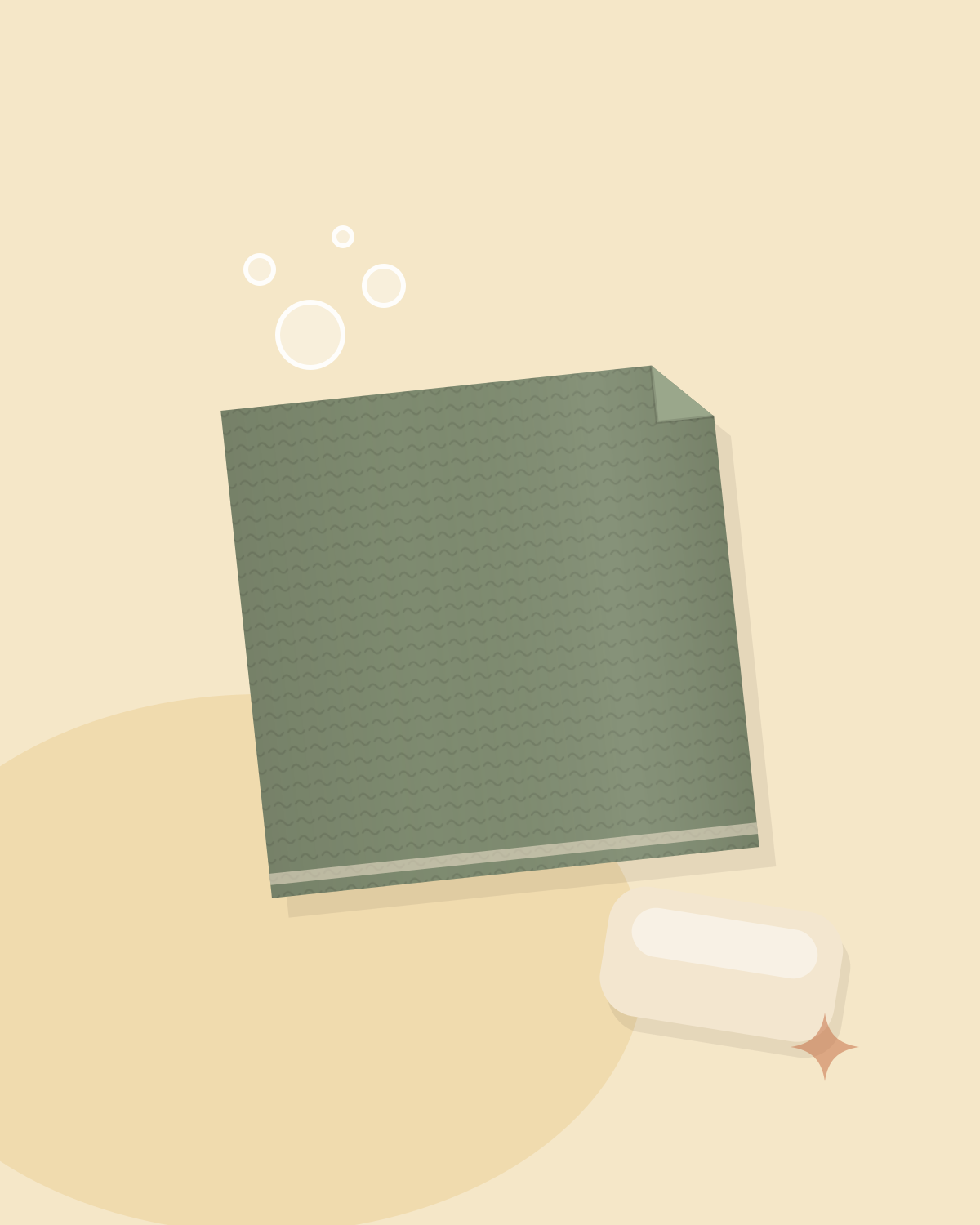
Once you can make a chain and a single crochet, this dishcloth is the perfect next step. It is simply rows of single crochet, worked back and forth until the piece is square — and at the end you have something genuinely useful for the kitchen.
- Skill level
- Absolute Beginner
- Finished size
- About 7.5 × 7.5 in (19 × 19 cm)
- Yarn weight
- Medium / Worsted
- Hook
- 5 mm (US H-8)
- Time
- About 2–3 hours
- Terminology
- US terms
Gauge: 14 sc and 16 rows = 4 in (10 cm). Gauge isn’t critical — a slightly larger or smaller cloth works just as well.
On this page
About this pattern
Every row has 26 stitches, so it is easy to check your count as you go. Dense single crochet makes a sturdy, slightly textured fabric, which is exactly what you want for washing dishes and wiping counters.
Cotton is the best fiber for this project: it absorbs water, stands up to hot washes and shows each stitch clearly while you learn. If your first rows look uneven, keep going — by the last rows your tension will be noticeably smoother.
Why you'll love it
- One stitch, repeated in simple rows
- Every row has the same stitch count, so mistakes are easy to spot
- Uses less than one ball of cotton yarn
- Useful, washable and a lovely handmade gift
Materials
Worsted-weight (medium
Estimated. One 2.5 oz (70 g) ball of about 120 yd (110 m) is enough.
About 80–90 yd (73–82 m)
5 mm (US H-8) crochet hook
Tapestry needle and scissors
2 stitch markers (optional)
Scraps of contrasting yarn work too
Abbreviations
- ch
- chain
- sc
- single crochetUK: dc
- st(s)
- stitch(es)
- rep
- repeat
This pattern uses US terms. Convert US ↔ UK terms
Stitches used
Notes before you start
- The chain 1 at the start of each row does not count as a stitch.
- Work each stitch under both loops at the top of the stitch below.
- Place a stitch marker in the first and last stitch of the row and move them up as you go, so you never miss an edge stitch.
- The stitch count after each row is the number of single crochet in that row.
Free pattern
The pattern
0 / 6
Tick rows and rounds as you finish them — your progress is saved on this device.
Foundation chain
Rows
Tip: To check that the cloth is square, fold it in half diagonally, corner to corner. If the corners meet exactly, it’s square; if not, add or remove a row or two.
Finishing
Tip: Cotton dishcloths can go in the washing machine. Expect the cloth to shrink slightly the first time it is washed in hot water.
Tips
- If the first rows pucker, make the foundation chain with a 5.5 mm (US I-9) hook, then switch to 5 mm for Row 1.
- Losing track of rows? Make a tally mark on paper at the end of each row, or use a row counter.
- The last stitch of a row sits right at the edge and is easy to miss. Look for its V before you turn.
Variations
- Add a border
- After the last row, work single crochet around all four edges, with 3 sc in each corner. Work 1 sc in each stitch along the top and bottom, and 1 sc in the end of each row along the sides, skipping about every seventh row end so the edges stay flat.
- Two-tone stripes
- Change to a second color every 4 rows. The guide to changing colors shows how to do it neatly at the end of a row.
- Bigger kitchen towel
- Ch 41 for 40 sc per row and work about 56 rows, for a towel of about 11 × 14 in (28 × 35 cm). You will need about 250 yd (230 m) of yarn.
Common questions
Why is my dishcloth getting wider?
An extra stitch is sneaking in at the start of a row, usually from working into the chain 1 or working twice into the first stitch. Count each row and mark the first and last stitches.
Can I use acrylic yarn?
You can, but cotton works much better for a dishcloth. It absorbs water and tolerates hot washes, while acrylic tends to push water around rather than soak it up.
What if my dishcloth isn’t perfectly square?
Add or remove rows until it is. Dishcloths are very forgiving, and the border variation neatens uneven edges too.
Written by
Editor — placeholder profile
This is a placeholder author profile. Before launch, replace it with the real person who writes, designs and tests the patterns on this site.
Placeholder profile — replace before launch
- Pattern testing
- Not yet tested
Keep making
You may also like
 Free pattern
 Free pattern
 Free pattern
 Free pattern
Newsletter
Get the next free pattern first.
New free patterns, gentle tutorials and seasonal ideas — about twice a month.