Crochet School · Reading patterns
How to Read Crochet Patterns
Crochet patterns use a compact shorthand. Learn how rows, rounds, brackets, asterisks and stitch counts work so you can follow any pattern with confidence.
On this page
A crochet pattern is a little like a recipe: a list of ingredients followed by step-by-step instructions, written in a shorthand that saves a lot of space. Once you know the handful of conventions below, almost every pattern becomes readable.
The parts of a crochet pattern
Most patterns follow the same order:
- Skill level — how challenging the pattern is.
- Materials — yarn, hook, notions and how much you need.
- Gauge — how many stitches and rows fit into a measured square.
- Finished size — the dimensions after finishing.
- Abbreviations — every shorthand term used.
- Notes — important information, such as whether turning chains count.
- Instructions — the rows or rounds.
- Finishing — assembly, weaving in ends and blocking.
Read the notes before you start. They often answer questions that would otherwise trip you up halfway through.
Rows and rounds
Rows are worked back and forth. At the end of each row you turn the work and crochet back along the row you just made.
Rounds are worked in circles, for hats, flowers, amigurumi and granny squares. Some patterns join each round with a slip stitch; others work in a continuous spiral with no join. In a spiral, a stitch marker in the first stitch of each round keeps you on track.
Reading one line of instructions
Here is a typical round:
Rnd 3: [Sc 1, inc] 6 times. (18)
- Rnd 3 — this is the third round.
- [Sc 1, inc] — the group of instructions inside the brackets: one single crochet, then one increase.
- 6 times — repeat that bracketed group six times.
- (18) — you should have 18 stitches when the round is finished.
Brackets, parentheses and asterisks
Square brackets [ ] hold a group of instructions to repeat a given number of times.
Parentheses ( ) usually mean one of two things: a group of stitches worked into the same place, such as (3 dc, ch 2, 3 dc) in the corner space, or the stitch count at the end of a row.
Asterisks * mark the start of a repeat that continues to a point described later, for example: *sc in the next st, ch 1; rep from * across.
Turning chains: do they count?
At the start of a row, you usually make a few chains to bring your hook up to the height of the next stitches. Whether that turning chain counts as a stitch depends on the pattern. If it counts, you skip the first stitch and work into the top of the turning chain at the end of the next row. If it doesn’t count, you work into the first stitch. The pattern notes will tell you which.
Stitch counts and why they matter
The number in parentheses at the end of a row is your best friend. Count your stitches whenever a count is given — especially in the first few rows. Finding a missed stitch early takes seconds; finding it ten rows later means unravelling.
Special stitches and techniques
Patterns often include a special stitches section describing anything unusual, such as clusters or post stitches. Basic stitches are assumed knowledge — look them up in the stitch library whenever you need a refresher.
US or UK terms?
US and UK patterns use the same words for different stitches. Check the pattern notes, look for clues such as “single crochet” (which only exists in US terms) and keep our US vs UK conversion chart handy.
Practice with a real pattern
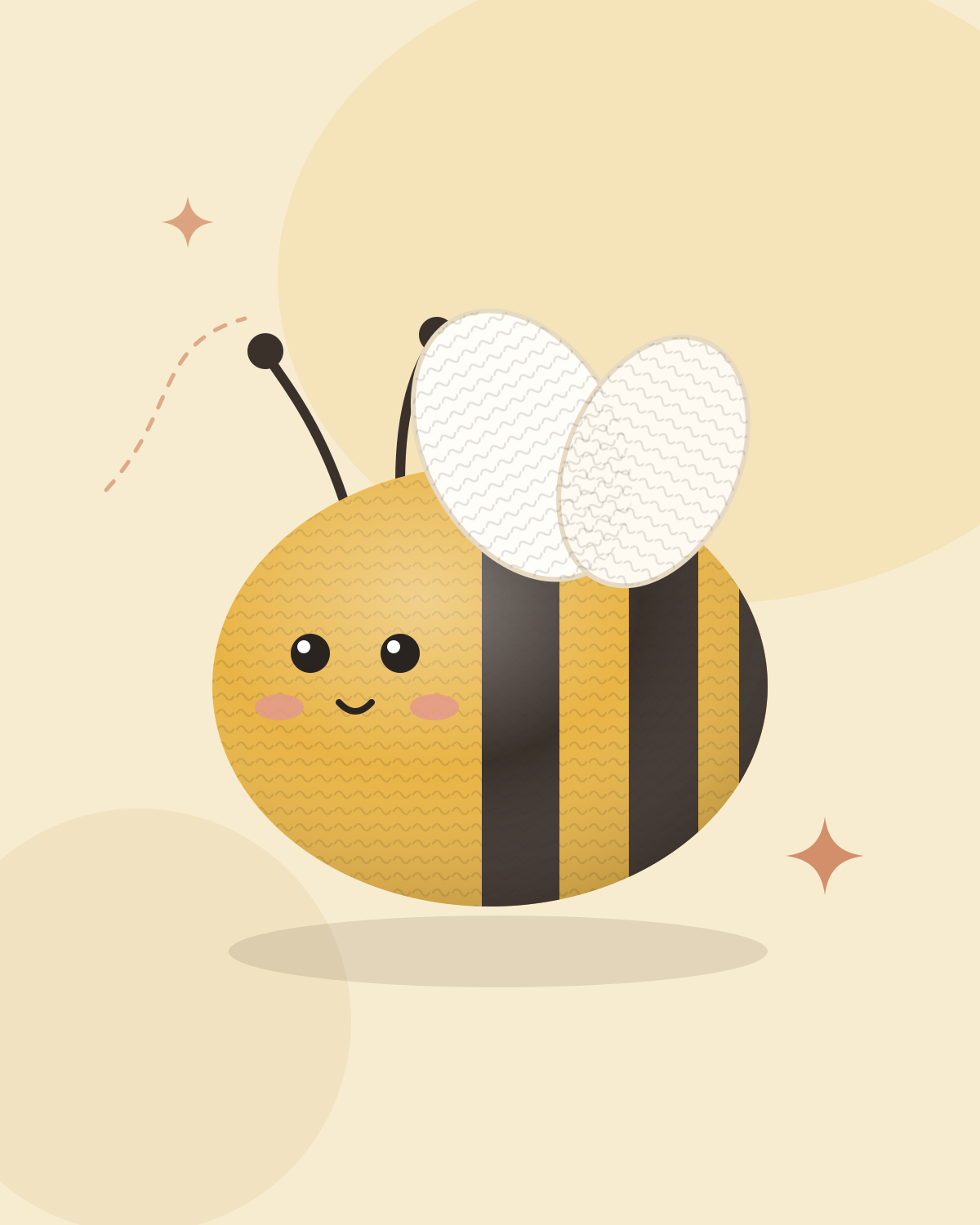
The mini bee uses rounds, brackets and stitch counts — a friendly way to put all of this into practice.
 Free patternEasy Mini Crochet BeeBeginner2 hours
Common questions
What does “work even” mean?
Work one stitch into each stitch, without increasing or decreasing.
What does “fasten off” mean?
Cut the yarn, leaving a tail, and pull the tail through the last loop on your hook to secure the work.
What is the difference between “in the next st” and “in the same st”?
“In the next st” moves you one stitch along. “In the same st” means you work again into the stitch you just used — usually to increase or form a corner.
Written by
Editor — placeholder profile
This is a placeholder author profile. Before launch, replace it with the real person who writes, designs and tests the patterns on this site.
Placeholder profile — replace before launch
Put it into practice
Patterns to practice with
- Free pattern
 Free pattern
 Free pattern
Newsletter
A little crochet inspiration in your inbox.
New free patterns, gentle tutorials and seasonal ideas — about twice a month.