How to Block Crochet: Wet, Spray and Steam Blocking
Blocking evens out stitches, straightens edges and makes granny squares match. Here is how to wet, spray and steam block crochet, and which method suits each fiber.
On this page
Blocking is the finishing step that makes crochet look its best. By dampening or steaming the fabric and letting it dry in the right shape, you relax the fibers, even out small differences in tension and set the final size.
When blocking helps
- Granny squares and motifs that need to match before joining
- Scarves and blankets with wavy or uneven edges
- Lace and shawls, where blocking opens up the stitch pattern
- Garment pieces that need to match their measurements
You can usually skip blocking for amigurumi, baskets and dishcloths.
What you need
- Blocking mats or foam puzzle mats
- Rust-proof pins, such as T-pins or blocking pins
- A spray bottle, a towel or a steam iron, depending on the method
- A tape measure
Check the fiber first
Always read the yarn label before you start. As a general guide:
| Fiber | Best method | Notes |
|---|---|---|
| Wool and other animal fibers | Wet or steam | Responds very well. Avoid hot water and rubbing, which can felt wool that isn’t superwash. |
| Cotton and linen | Wet or spray | Holds its new shape well when blocked damp. |
| Acrylic | Steam | Heat relaxes acrylic permanently; wet blocking has little lasting effect. |
| Blends | Follow the main fiber | Test on a swatch if you’re unsure. |
Wet blocking
The most thorough method, and the best choice for wool and cotton.
- Soak. Submerge the piece in cool or lukewarm water, either plain or with a little no-rinse wool wash, for about 15 to 20 minutes, until it is wet all the way through.
- Lift and squeeze. Support the weight as you lift it out, then gently squeeze out the water. Never wring or twist.
- Roll in a towel. Lay the piece on a towel, roll them up together and press to remove more water.
- Pin to shape. Lay it flat on your mats, shape it to the right measurements and pin the edges every inch or two.
- Let it dry completely. Leave it pinned until it is fully dry, which often takes a day. Unpinning too early lets it spring back.
Spray blocking
The gentlest method, good for cotton, small motifs and pieces you’d rather not soak.
- Pin the dry piece to its finished shape.
- Mist it with water until it is evenly damp all over, and pat the water in with your hand.
- Leave it pinned until it is completely dry.
Steam blocking
The best way to relax acrylic, and a quick option for wool.
- Pin the piece to shape.
- Hold a steam iron or garment steamer about 1 in (2.5 cm) above the fabric and let the steam soak in. Don’t let the iron touch the crochet, and keep your fingers out of the steam.
- Leave it pinned until it has cooled and dried.
With acrylic, go slowly. A little steam softens and relaxes the fabric; too much makes it limp and flat, and the change can’t be undone. Test on a swatch first.
Blocking granny squares in batches
Draw or mark a square the size you want on your mat, then pin each granny square to that outline. Spray cotton or wool squares, or steam acrylic ones, and leave them to dry. Squares blocked to the same size are much easier to join into a straight blanket.
If something goes wrong
- It shrank back after unpinning. It probably wasn’t completely dry, or it is acrylic that needs steam instead of water.
- The edges have points where the pins were. Use more pins placed closer together, or thread blocking wires along straight edges before pinning.
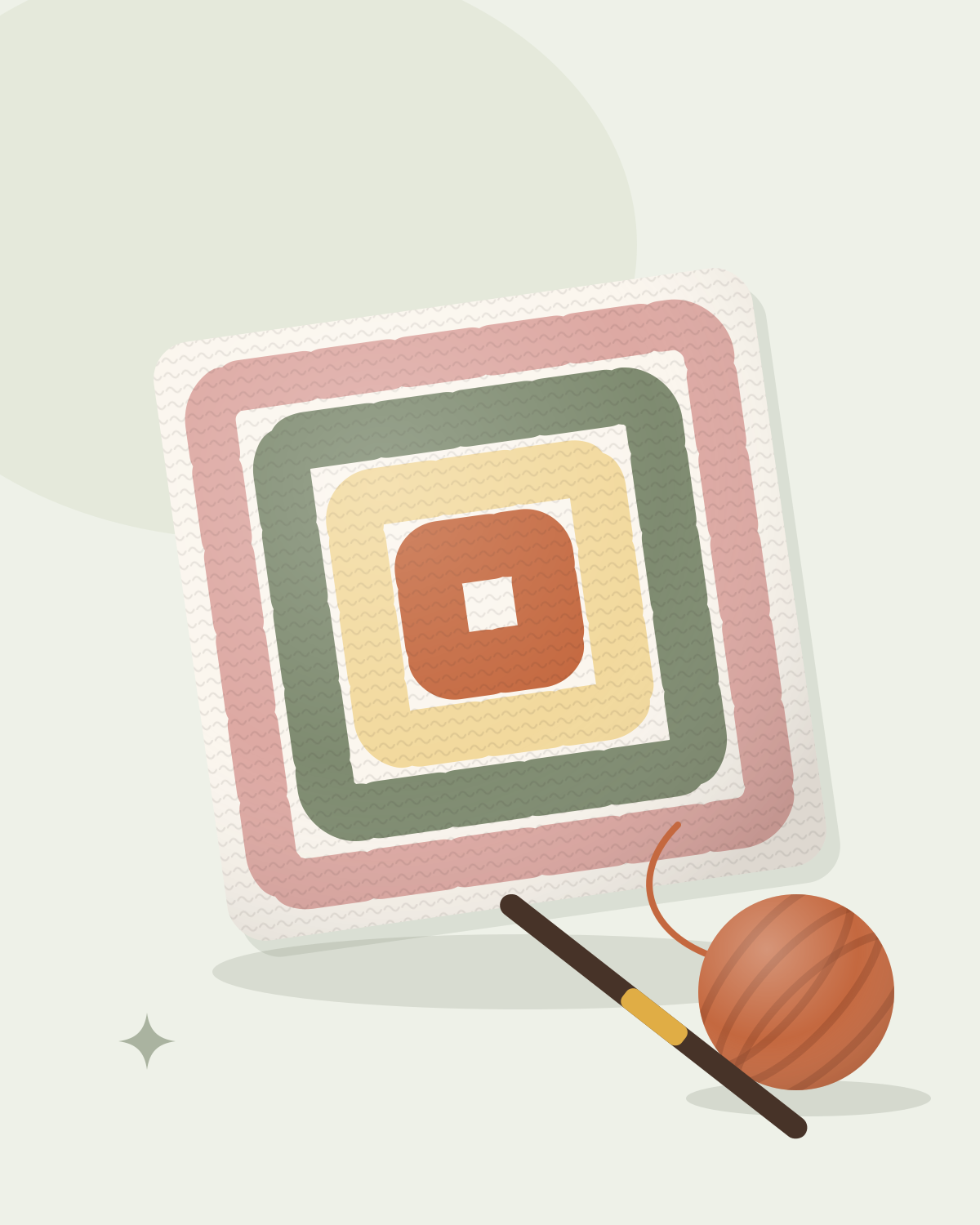 Free patternBeginner Granny SquareBeginner45 minutes
Common questions
Do I need to block every crochet project?
No. Blocking helps most with flat pieces that need a set size or shape, like granny squares, shawls, lace and garment pieces. Amigurumi, baskets and most dishcloths don’t need it.
Can you block acrylic yarn?
Yes, with gentle steam. Heat relaxes acrylic permanently, so hold the iron above the fabric and never press. Wet blocking usually has little lasting effect on acrylic.
What can I use instead of blocking mats?
Foam puzzle mats, a folded towel on a carpet or a spare mattress all work, as long as you can push pins in and the piece can dry undisturbed.
Written by
Founder & editor
Akram Afkir runs All About Crochet from Casablanca, Morocco, and is responsible for the patterns, tutorials and guides published on the site.
Patterns mentioned
- Free pattern
 Free pattern
Keep reading
All articles
Techniques
Amigurumi Tips for Beginners: Fix Gaps, Lumpy Stuffing and Wonky Faces
Stuffing showing through, holes at decreases, lumpy shapes and crooked faces are the most common amigurumi problems. Here is how to fix each one.
· 3 min read
Techniques
How to Join Granny Squares: 4 Easy Methods
Four beginner-friendly ways to join granny squares into a blanket: whipstitch, slip stitch, single crochet and join-as-you-go, with tips for flat seams and matching corners.
· 3 min read
Beginner Guides
Crochet vs Knitting: Which Is Easier to Learn?
Crochet and knitting both turn yarn into fabric, but they feel very different to learn. Compare tools, speed, fabric and first projects to choose the right craft for you.
· 2 min read